How to efficiently machine shaped parts on CNC mill-turn machines?


With technological advancements, smart manufacturing has emerged as a core trend in the transformation and upgrading of the manufacturing industry, driving ever-increasing demands for machining precision and efficiency.
As a core tool in CNC machining, the selection and compatibility of turning tools directly impact production efficiency.
Currently, mechanically clamped turning tools dominate the machining industry due to their standardization advantages, while the application of manually sharpened turning tools is gradually declining.
Traditional standardized tools face limitations when machining complex parts. These limitations cause redundant process steps during production.
Manufacturing systems often require frequent and time-consuming tool changes. Traditional tools fail to meet the evolving requirements of smart manufacturing.
Modern production increasingly demands higher tool safety and greater machining efficiency.
Using specific part machining as a case study, this article explores the role of custom-made tools in optimizing CNC machining processes.
By analyzing the current state of turning tool applications alongside the requirements of smart manufacturing, it provides technical guidance for the industry to reduce costs and improve efficiency.
While providing technical support, the author encountered a spacer part, as shown in Figure 1, with an outer diameter of 100 mm, an inner bore of 65 mm, and a thickness of 5 mm.
The material was 45# steel, and the blank was obtained by sawing a seamless steel tube measuring 102 mm in diameter and 20 mm in wall thickness, with a thickness of approximately 7.5 mm.

The machining sequence for this part is as follows: blanking → turning the outer diameter, left end face, and outer chamfer → turning the inner bore, right end face, and inner/outer chamfers → turning the chamfer between the left end face and the inner bore → drilling a Φ6.3 hole → grinding both end faces → cleaning. The following is the original turning process plan.
Operation 10: The inner hole supports and positions the workpiece during machining. A 90° external turning tool performs rough and finish turning of the outer diameter.
Standard machine-clamped turning tools apply unless otherwise specified. The machining process also forms the left end face.
The tool completes the external chamfer in the same operation.
Operation 20: The workpiece is reversed for the next operation. A special fixture clamps the outer diameter to secure positioning.
A 90° internal turning tool performs rough and finish machining of the internal bore. The tool also machines the right end face and the internal chamfer.
A 90° external turning tool completes the external chamfer machining.
Operation 30: Reversal, outer diameter clamped with special fixture, 90° internal turning tool for turning the left-end internal chamfer.
Due to the large volume of this part, the company requested that the turning process be optimized.
After conducting on-site research, our team proposed a process improvement plan and carried out comparative trials.
We decided to merge Process 30 with Process 20, as detailed below.
Process 10: Bore the inner hole; rough and finish the outer diameter using a 90° external turning tool; turn the left end face and external chamfer.
Process 20: Flip the workpiece; clamp the outer diameter using a special fixture;
Rough and finish the inner hole using a 90° internal turning tool;
Turn the right end face and internal chamfer; use a 45° special turning tool to turn the external chamfer on the right end face and the internal chamfer on the left end.
To avoid interference between the cutting tools and the fixture, this solution requires careful design of the special fixture to ensure sufficient space for the tools to machine the internal chamfers.
Additionally, the tools must be ground without compromising cutting performance.
Normal tool operation requires stable and reliable performance. Fixture design must maintain sufficient rigidity during machining.
Engineers evaluate the costs of fixture design and manufacturing carefully. Tool grinding complexity also influences the overall process decision.
These factors together guide a balanced and practical machining solution.
After research by the author’s team, the machining schematic shown in Figure 2 was finalized.

During the improvement process, the author not only optimized the process sequence but also significantly reduced machining time through CNC program optimization.
The optimized program is shown below (using the Huazhong CNC system as an example;
Since Process 10 remained largely unchanged before and after optimization, it will not be discussed further here;
Instead, the focus will be on the machining program for Process 20).
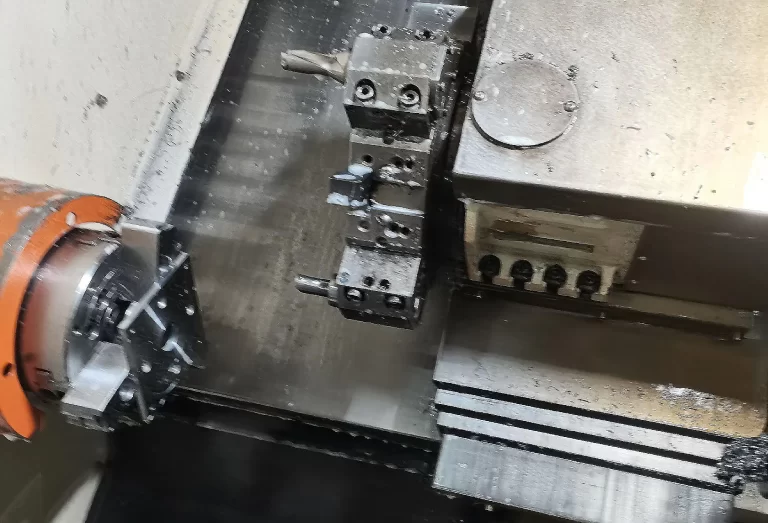
Figure 3 illustrates the sequence of CNC machine calls for this process.
| Program Code | English Translation |
|---|---|
| %0002 | Program No. 0002 |
| N010 T0202 | Select 90° internal hole turning tool, tool tip R0.8 |
| N020 M08 | Coolant ON |
| N030 M03 S800 | Spindle clockwise rotation, 800 rpm |
| N040 G00 X62 Z2 | Rapid positioning to machining start point |
| N050 G95 G80 X64 Z-6.5 F0.3 | Rough boring, feed rate 0.3 mm/rev |
| N0060 G81 X102 Z0.5 F0.2 | Rough facing, feed rate 0.2 mm/rev |
| N0070 G00 X65.25 | Rapid positioning to finish boring start point |
| N0080 G01 Z-6.5 F0.2 | Finish boring, feed rate 0.2 mm/rev |
| N0090 G00 X62 | Tool retract |
| N0100 G01 G42 X64.25 Z-2.5 | Rapid positioning to inner chamfer start point and enable tool nose radius compensation |
| N0110 X71.93 Z0 | Machine internal chamfer |
| N0120 X103 | Finish facing |
| N0130 G40 G00 X105 | Cancel tool compensation and retract tool |
| N0140 G00 Z100 | Return to reference point |
| N0150 T0303 | Change to special-purpose tool, use tool tip |
| N0160 M03 S600 | Spindle clockwise rotation, 600 rpm |
| N0170 G00 X103 Z0 | Rapid positioning |
| N0180 G01 Z-1.3 F0.3 | Machine external chamfer, leave 0.25 mm for grinding |
| N0190 G00 Z10 | Tool retract |
| N0200 T0306 | Change tool offset, use tool tip |
| N0210 G00 X64 | Rapid positioning |
| N0220 Z-6 | Rapid positioning |
| N0230 G01 X68.75 | Machine internal chamfer, leave 0.25 mm for grinding |
| N0240 G00 X64 | Tool retract |
| N0250 G00 Z100 | Tool retract |
| N0260 X150 | Return to the reference point |
| N0270 M09 | Coolant OFF |
| N0280 M30 | End of program |
Figure 3: Machining program for Process 20
As a core tool in mechanical cutting operations, the application methods and technical selection of turning tools directly impact machining accuracy, production efficiency, and cost control.
Manufacturing industries are transforming toward automation and high-precision production. This transformation restructures how turning tools are applied across machining processes.
Different application patterns emerge for traditional and modern turning tool types. These changes reflect evolving requirements in contemporary manufacturing systems.
In today’s machining industry, mechanically clamped turning tools dominate the market.
These tools secure indexable carbide inserts to the tool body using mechanical structures such as levers and screws, enabling cutting operations without welding.
This approach completely eliminates defects such as reduced hardness and cracks caused by welding thermal stress, significantly improving tool durability.
At the same time, worn inserts can be quickly repositioned or replaced, significantly reducing downtime and setup time;
The reusable tool body lowers tooling costs, aligning with companies’ core objectives of cost reduction and efficiency improvement.
In actual production, the use of hand-sharpened turning tools has declined significantly and is now limited to only a few specific scenarios.
The use of these tools relies heavily on the operator’s technical expertise;
It requires not only a thorough understanding of tool angles but also extremely precise manual control.
Even for experienced master craftsmen, the performance of each sharpened tool can vary.
CNC machine tool usage increases from 42% in 2018 to 67% in 2023. This growth significantly raises demand for standardized, high-precision cutting tools in automated machining.
Automated production systems increasingly require consistent and reliable tool performance. These conditions highlight the limitations of hand-sharpened turning tools more clearly.
Currently, hand-sharpened turning tools are used only in a limited number of scenarios, such as small repair shops, the machining of single-piece or small-batch non-standard parts, or emergency cutting of special materials;
They can no longer meet the mainstream demands of modern manufacturing.
Research indicates that application scenarios have changed significantly. These changes influence how schools design their curricula.
Most schools reduce the proportion of manual tool grinding in training programs. This reduction reflects shifts in modern manufacturing education requirements.
Previously, manual tool grinding was a core component of metalworking internships;
However, the proportion of conventional machine tools used in production has dropped from 35% to 22%, with CNC machine tools becoming the mainstream processing equipment.
CNC machine tools, however, have minimal need for manually sharpened tools.
At the same time, vocational schools generally face the dilemma of compressed practical training hours and diverse teaching tasks.
Additionally, manual tool sharpening operations pose safety risks, which is the primary reason for the reduction of this practical training component.
Manufacturing industry transformation and upgrading drives changes in talent requirements. Educational systems adjust training content to match these evolving needs.
This alignment connects educational resources more closely with industry development. Such coordination improves resource allocation and reduces ineffective skills training.
Smart manufacturing serves as a core focus in manufacturing transformation and upgrading. It integrates information technology with manufacturing technology at a deep level.
This integration enables intelligent sensing across production processes. It also supports automated decision-making and precise process control.
As the core execution unit in machining, the performance of cutting tools directly determines the machining accuracy, production efficiency, and operational safety of smart manufacturing systems.
Smart manufacturing operates through data-driven processes. Production systems actively support efficient collaboration across all functions.
Intelligent decision-making systems analyze operational data to guide production activities. Flexible production structures adapt quickly to changing requirements.
These capabilities together build a comprehensive intelligent production system covering all elements and processes.
First, industrial Internet technologies and sensors enable data interoperability in manufacturing systems. These systems collect real-time data from cutting tools and equipment continuously.
Production management systems receive and exchange operational data across all stages of machining. The integrated data flow forms a complete chain covering the entire machining cycle and supports production optimization.
Second, collaborative integration removes silos in traditional production processes. Manufacturing systems connect equipment, production systems, and management units closely.
These components interact to achieve deep cross-functional collaboration. An integrated control model coordinates operations across all production stages.
Third, Flexible production systems actively respond to changes in market demand. Manufacturing operations adjust quickly to shifting customer requirements.
Adaptive parameter settings support efficient switching between production tasks. These mechanisms enable high-mix, low-volume production with improved flexibility and speed.
Fourth, Predictive maintenance applies big data analytics and artificial intelligence algorithms.
These systems analyze operational data to forecast equipment operating conditions and tool wear accurately.
The forecasting results enable maintenance teams to take proactive actions before failures occur. This approach reduces downtime risks and improves overall production reliability.
These characteristics necessitate higher standards for standardization, intelligence, and reliability across all production elements.
As a critical executive component, the compatibility of cutting tools directly impacts the operational efficiency of the smart manufacturing system.
The trend toward automated and unmanned production in smart manufacturing has made tool safety a core prerequisite for ensuring continuous production operations.
Safety requirements have evolved from the traditional focus on “preventing breakage and wear” to systematic safety management throughout the entire tool lifecycle.
On the one hand, cutting tools must possess precise condition monitoring capabilities. Built-in sensors collect real-time data on cutting forces, temperature, and vibration.
These sensors continuously monitor machining conditions during operation.
The system uses collected data to provide accurate feedback on tool wear levels and edge condition.
Accurate condition monitoring helps prevent workpiece scrap, equipment damage, and sudden tool failure.
On the other hand, the structural stability and adaptability of cutting tools must be enhanced.
Smart manufacturing systems operate with increased equipment speeds and cutting parameters.
These operating conditions place higher demands on machining performance. Tool rigidity must withstand greater mechanical loads during cutting operations.
Dynamic balance performance ensures stable operation under high-speed conditions.
Measures such as optimizing tool body structures and using high-strength materials are necessary to prevent risks such as tool chatter and detachment during high-speed cutting.
Smart manufacturing prioritizes high-efficiency production as a core objective. Cutting tools function as direct execution units in machining operations.
Manufacturing systems rely on cutting tools to execute material removal processes. Improving cutting tool efficiency actively enhances overall production capacity.
Compared to traditional manufacturing models, smart manufacturing places distinct demands on cutting tool efficiency characterized by “high speed, high efficiency, and long service life.”
First, the need for high-speed cutting is becoming increasingly prominent.
High-end CNC machine tools operate with higher spindle speeds and increased feed rates in smart manufacturing systems.
Cutting tools must provide strong heat resistance and high wear resistance under these conditions.
High-speed cutting generates harsh thermal and mechanical loads on the tool system.
Manufacturers reduce per-part machining time by increasing cutting line speed effectively.
Second, the demand for multi-task integration has increased. To reduce setup time, cutting tools must possess multi-functional integration capabilities.
For example, composite turning-milling tools can simultaneously perform multiple operations such as turning and milling, achieving “one tool, multiple functions” and significantly enhancing machining continuity;
Third, there is an urgent need for long-lasting and stable cutting performance.
The continuous production model of smart manufacturing places higher demands on tool life.
By optimizing insert materials, coating technologies, and edge designs, tool life can be extended, tool change frequency reduced, and the proportion of non-machining time minimized.
In summary, tool optimization is a proven and effective solution for addressing the challenge of process optimization for complex parts.
In both conventional machine tool machining and manually operated CNC machining, machine adjustments are relatively straightforward, and special-purpose tools can be customized through manual sharpening.
Smart manufacturing is evolving rapidly through automation technology. Robotic handling systems are widely adopted in production environments.
Manufacturers are implementing automated fixtures for improved stability and efficiency. Tool management systems coordinate cutting tool usage and replacement actively.
Online inspection systems monitor machining quality in real time. These integrated technologies actively reduce human involvement in machining processes.
Only standardized custom tools can meet the demands of smart manufacturing.
At the same time, tool design and development should become an important component of vocational education and talent development.